

Skip to content

Standards and certificates

Which standard applies to what, and which compound meets it

Drinking water, fire protection, food contact and quality: what the main standards require, what is changing right now, and for each standard the direct way to the compounds with a valid approval.

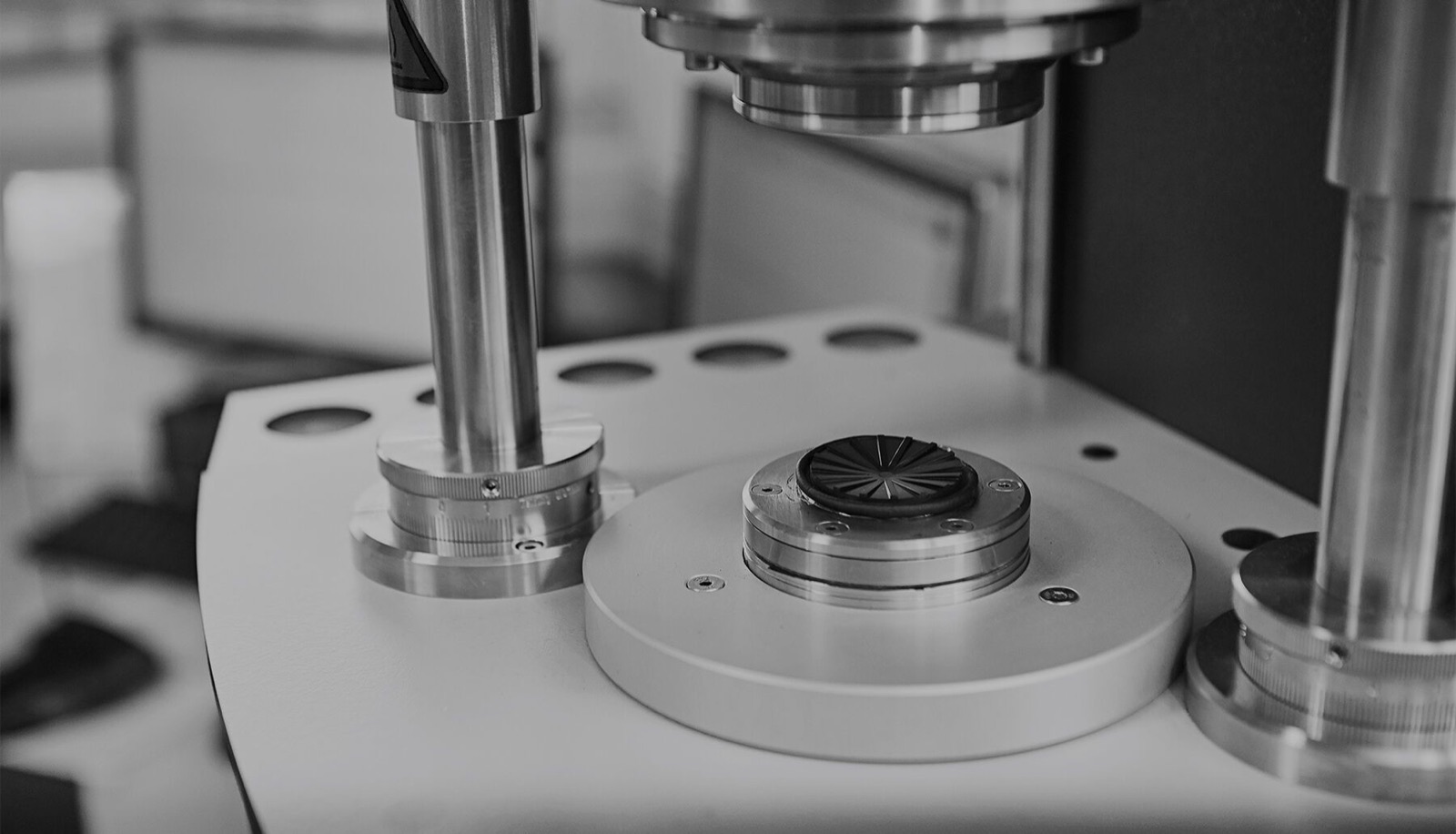
Curemeter in the Compounds laboratory: test chamber with a rubber sample

Drinking water

Anyone making drinking water components today needs separate approvals for each market. The EU Drinking Water Directive (DWD) brings a common European system, with a transition period until the end of 2032.

Germany

KTW-BWGL

Since 1 Jul 2026 the KTW-BWGL self-declaration has been mandatory in Germany.

What this means in practice

Assessment basis of the German Environment Agency (UBA) for plastics and other organic materials in contact with drinking water. Our tables give the test temperature: 23 °C (cold), 60 °C (warm) or 85 °C (hot).

For manufacturers and distributors of drinking water components

  • Obligation to confirm conformity, following the acceptance process of the Construction Products Regulation.
  • Stricter test requirements: materials must prove their drinking water hygiene.
  • Typical duration: formulation test 3 to 4 months, migration test 4 to 11 weeks, microbial growth to DIN EN 16421 3 to 4 months; a full procedure can take up to 12 months.
  • With an already certified compound you use the existing formulation test and the DIN EN 16421 results: that saves several months.

For processors of elastomer compounds

  • Stricter material requirements: the component manufacturers pass them on to you.
  • The materials' drinking water hygiene must be proven.
  • Certification obligation under system 1+ of the Construction Products Regulation, depending on the product category.
  • With a certified compound you avoid changeovers and keep delivering without delay.

Tests according to EN 1420, EN 13052-1, EN 12873-1 and -2 (KTW-BWGL, ACS).

EU

EU Drinking Water Directive (DWD)

Directive (EU) 2020/2184 replaces the national rules with a European conformity assessment. What applies when:

  1. 1 July 2026

    in force since · Germany

    KTW-BWGL self-declaration mandatory

    Existing (and possibly new) products with national conformity remain permitted.

  2. today

    1 January 2027

    from · EU · in 35 days

    New products only with DWD conformity

    The Drinking Water Directive no longer assesses the material but the product: conformity assessment by notified bodies.

  3. 31 December 2032

    from · EU · in 6 years

    End of the transition period

    Until then existing products with national conformity (KTW-BWGL, ACS …) remain permitted.

What changes, and the risk groups
  • It is no longer the material that is assessed but the product: conformity is confirmed by a notified body under EU modules B, C and D.
  • Risk-based: the conversion factor (FC) describes how strongly a product interacts with drinking water. It determines the risk group and the testing effort.
  • New: migration tests in chlorinated and non-chlorinated water, GC-MS analyses and sensory tests including a taste test.
  • European positive list (Implementing Decision (EU) 2024/367): every substance has an expiry date between 2028 and 2037 and is deleted without an application. All accelerators expire on 31.12.2031; the application to ECHA must start in 2028 at the latest.
  • The DWD certifies products, not compounds. For our DWD-ready compounds, migration, GC-MS and microbial growth have already been characterised on sample plates.

Risk groups by conversion factor

GroupRiskConversion factor FCTesting effort
RG1high≥ 4full, plus surveillance
RG2increased0.4 – < 4full
RG3moderate0.04 – < 0.4extended
RG4low< 0.04basic

How we help

We help you choose the compound and the notified body, prepare the migration and GC-MS tests and the certification, and set the process parameters for compression, injection moulding and extrusion.

Germany

UBA-Elastomerleitlinie und Positivliste

What the standard requires

The German Environment Agency's elastomer guideline (ELL) of 2011 sets out in a positive list which substances may be used in elastomers in contact with drinking water. Unlisted substances were permitted only until 31.12.2021. The new AquaFlex generation uses only substances on the positive list.

Europe, Germany

DIN EN 16421 (ex DVGW W270)

What the standard requires

European standard on the enhancement of microbial growth on materials in contact with drinking water; it replaces the DVGW worksheet W270. Our tables state procedure 2 and the rating M1, M2 or M3.

Europe

EN 681-1

What the standard requires

Material requirements for elastomeric seals of pipe joints in water supply and drainage (vulcanised rubber). Proven by a DVGW type examination certificate; the table gives the type, e.g. WA or WAL.

United Kingdom

WRAS (BS 6920)

What the standard requires

Material approval of the Water Regulations Advisory Scheme to BS 6920, for cold and hot water; the table gives the test temperatures, e.g. 23 °C / 85 °C.

USA, Canada

NSF/ANSI/CAN 61

What the standard requires

Health effects requirements for drinking water system components. The approval applies to the finished part (in the table: «on final part»).

Drinking water: our solution

Fire protection

In Europe EN 45545-2 applies to rail vehicles and EN 13501-1 to construction products. UL94 adds requirements for parts in devices, NFPA 130 for rail in the USA.

EU

EN 45545-2

Requirement sets and tests

Railway applications, fire protection on railway vehicles, part 2: requirements for the fire behaviour of materials and components. Every component belongs to a requirement set (R) with its own tests; how strict the limits are depends on the hazard level HL1 to HL3.

Requirement sets in our tables

RequirementComponentsTestsCompounds with a valid approval
R1Components interiorHeat release (MARHE), Smoke (Ds), Toxicity (CITG), Flame spread (CFE), Smoke (VOF4)none with a valid approval
R7Components exteriorHeat release (MARHE), Smoke (Ds), Toxicity (CITG), Flame spread (CFE)none with a valid approval
R9Suspension parts, wheelsHeat release (MARHE), Smoke (Ds), Toxicity (CITG)2 compounds
R22Electrical and mechanical devices interiorOxygen content (OI), Smoke (Ds max), Toxicity (CITG)5 compounds
R23Electrical and mechanical devices exteriorOxygen content (OI), Smoke (Ds max), Toxicity (CITG)5 compounds
R24Conductor boardOxygen content (OI)6 compounds

Hazard levels HL1 to HL3

The level follows from the operation and design category of the vehicle, such as how long it runs in tunnels and how quickly passengers can be evacuated. HL3 has the strictest limits: a compound with HL3 also meets the same requirement set for HL2 and HL1. Not every «fire-tested» compound reaches HL3.

The classification applies to the tested thickness (2 to 6 mm in our tables); the compound finder gives it for each approval.

EU

EN 13501-1

What the standard requires

European classification of the reaction to fire of construction products, from A1 to F, with smoke production (s) and flaming droplets (d). In practice it replaces the German DIN 4102.

DIN 4102 or EN 13501-1?

DIN 4102 (old)EN 13501-1 (new)
Scopenational, Germany onlyharmonised across Europe, mandatory for construction products in the EU
Classesreaction to fire, e.g. B1 = flame-retardant, B2 = normally flammableA1 (non-combustible) to F (easily flammable); floorings with index fl, e.g. Bfl
In addition–smoke production s1 to s3 and flaming droplets d0 to d2
Comparabilityno uniform comparability across borderscertainty and comparability at European level

International

UL94 V-0 (NF EN 60695-11-10)

What the standard requires

Flammability test for plastics in devices. V-0 is the best class of the vertical test: the flame goes out within 10 seconds, with no flaming drips. The table gives the test thickness, e.g. V-0 @3mm.

USA

NFPA 130

What the standard requires

US standard for Fixed Guideway Transit and Passenger Rail Systems, with requirements for the fire behaviour of the materials in the vehicles.

Further approvals of the DragonFlex line according to our previous website: ASTM C1166 (C542), ASTM 662, Bombardier SMP 800-C. They are not in the compound table: please ask.

Fire protection: our solution

Food contact

In the EU the framework Regulation (EC) No 1935/2004 applies, with national additions such as the BfR recommendations; in the USA the FDA. Both work with positive lists: what is listed is permitted.

EU

EG 1935/2004

What the standard requires

Framework regulation for all materials and articles in contact with food: they must not transfer constituents in quantities that endanger health or change the food.

Germany

BfR-Empfehlung XXI, Kategorie 1 und 4

What the standard requires

Recommendation of the German Federal Institute for Risk Assessment for commodities made of natural and synthetic rubber; it groups products into categories by type and duration of food contact. Category 4: compliance depends on the application of the product and needs to be discussed in detail.

Italy, France

DM 21.3.1973 (MOCA), Arrêté du 5 août 2020

What the standard requires

National rules for materials in contact with food. In the FoodFlex table for T9696: DM 73 met, Arrêté announced («soon»).

Food contact: our solution

Quality

SQS

ISO 9001, ISO 14001, ISO 45001

Reg. no.
36880
Validity
29 Oct 2025 – 28 Oct 2028

Status today: valid until 28 Oct 2028

What the standard requires

Quality, environmental and occupational health and safety management, certified by SQS. Scope: development and manufacturing of rubber compounds, sheets and profiles.

Compounds

Testing on every order

The tests in detail

All products are monitored during the process; for every production order a test plan is carried out and documented. For every compound we test at least:

TestStandard
Rheometry (cure characteristics) on the raw compoundDIN 53529-3
Shore hardness on vulcanised test piecesDIN ISO 7619-1 / DIN ISO 48
Density on vulcanised test piecesISO 1183-1

On request, for a fee: Mooney viscosity, compression set, tensile test, tear resistance, rebound, abrasion, electrostatics, artificial ageing, colour, visual inspection, moisture content and resistance to fluids.

All documents on quality and purchasing

Your application, our compound

Tell us the application, standards, hardness, process and quantity: we reply with a proposal and, if you wish, with samples.

Send a request